NVIDIA gave away a 120B agent model, and its little brother runs on a laptop. The open-model race is the only AI race that matters for your business.
Originally published on LinkedIn.
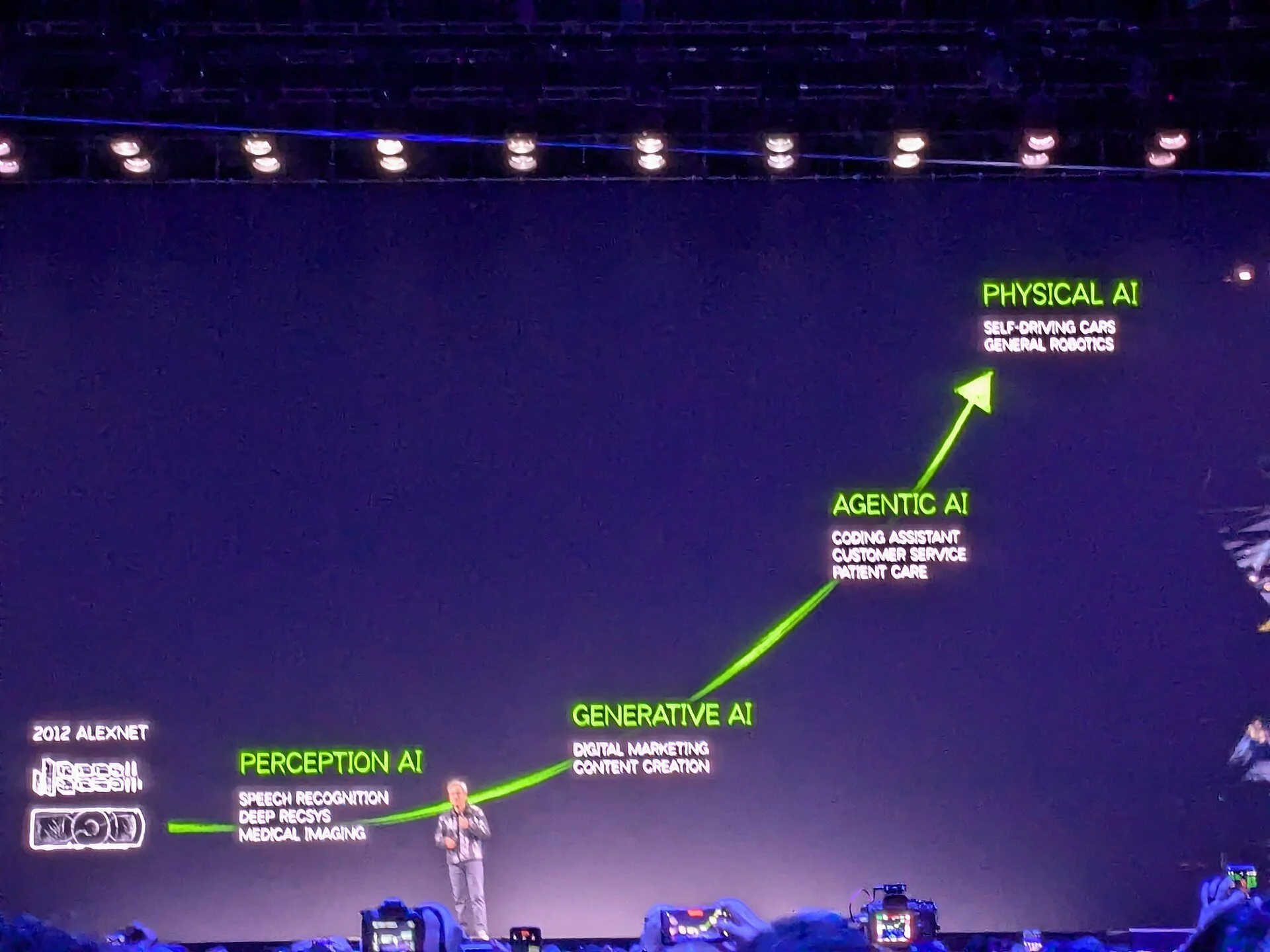
This morning the number one trending topic in business on X was not a stock, a merger, or an earnings call. It was a model name: Nemotron 3.5 Super VL. NVIDIA's announcement post passed 97,000 views in its first hour.
I've been running my own back office on AI agents for most of this year, and I spent years before that selling software to companies that were deciding what to build on. Here is why I think this release matters more for a normal business than anything OpenAI or Google shipped this month.
What NVIDIA shipped on October 15
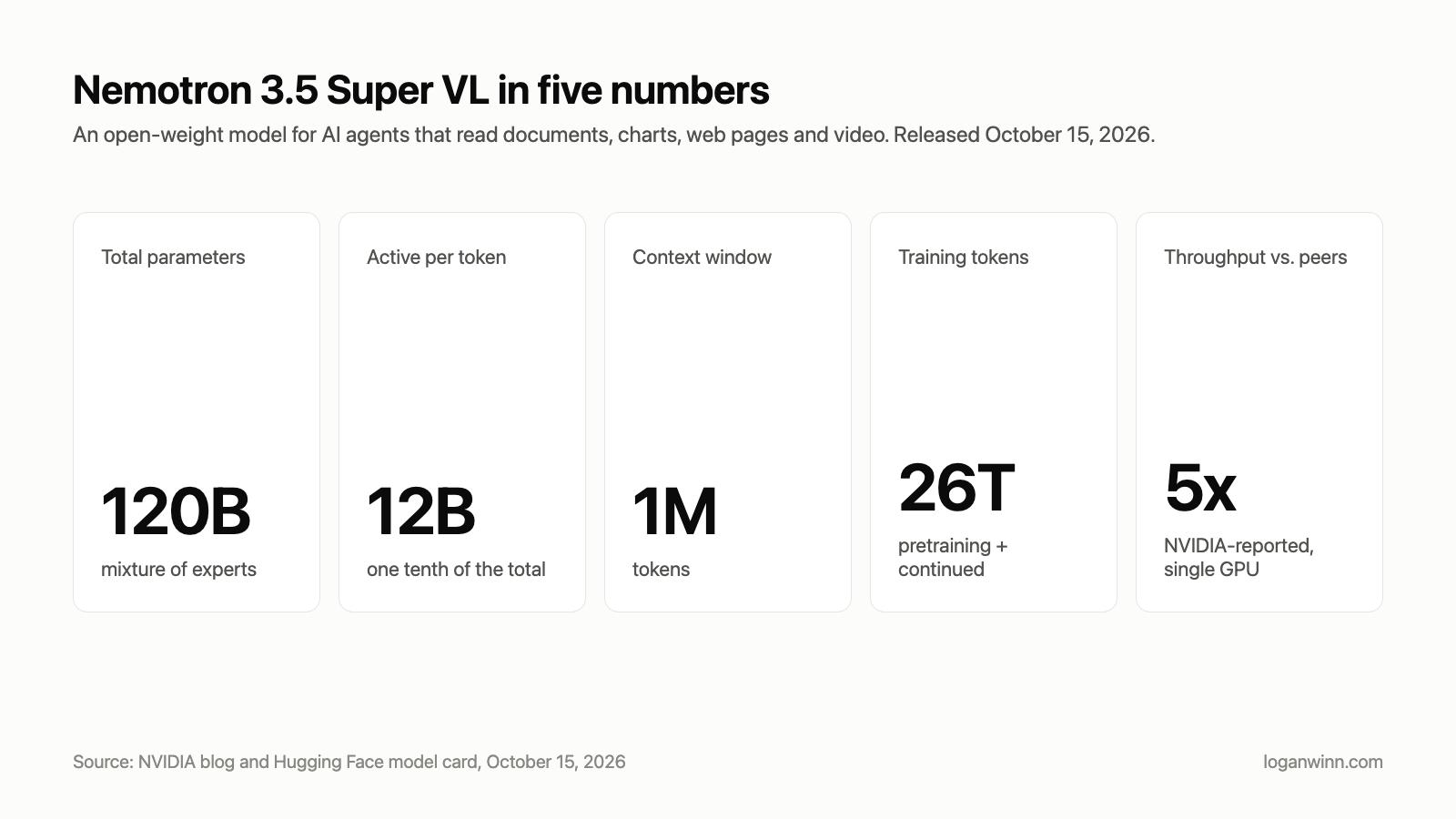
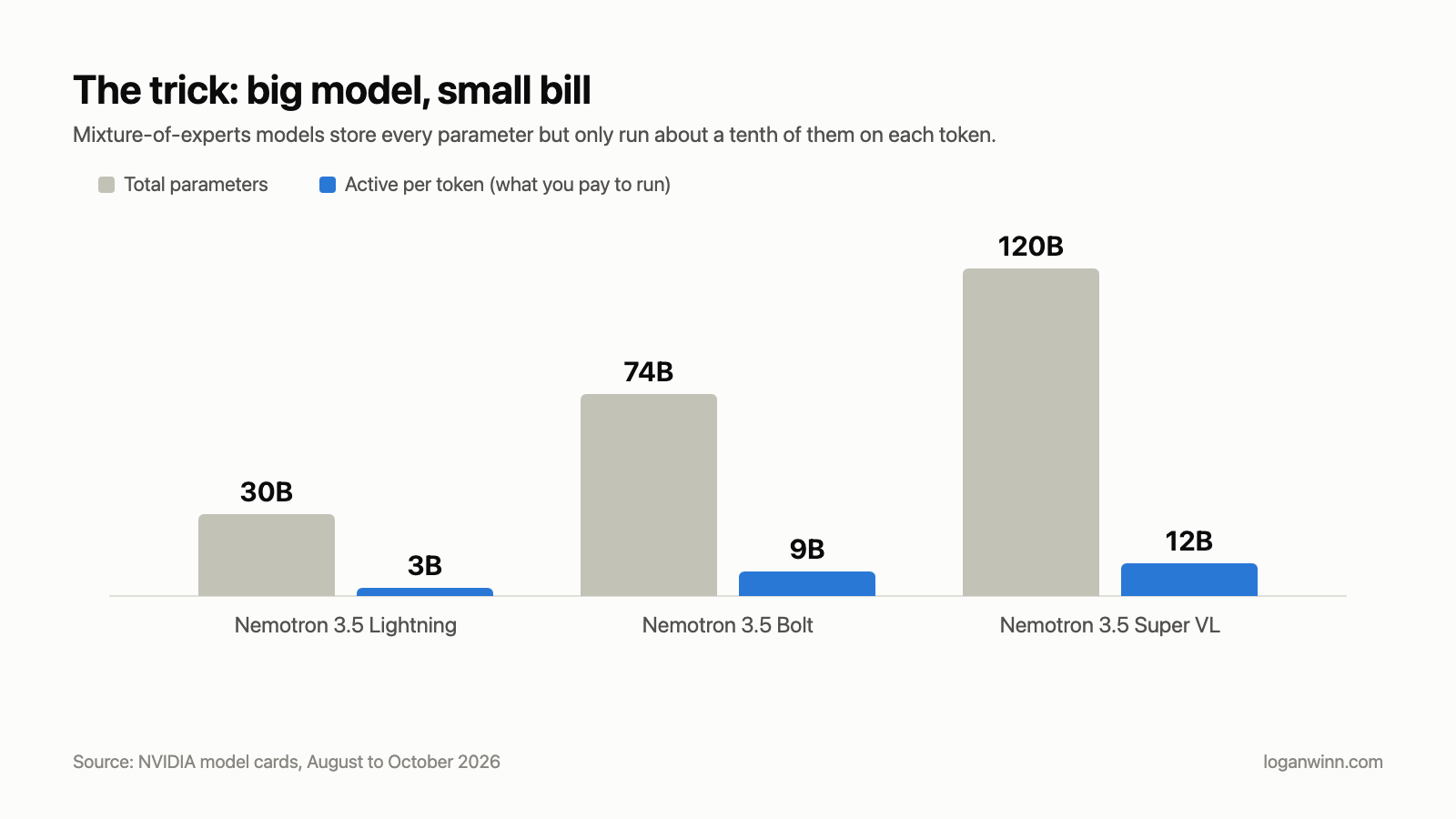
Nemotron 3.5 Super VL is an open-weight model built for AI agents that run for a long time and have to read things: PDFs, invoices, charts, tables, web pages, and video. It has 120 billion total parameters but only activates about 12 billion on each token, which is the trick that makes it cheap to run. It takes text, images, and up to two minutes of video as input, and it handles a context window of up to one million tokens.
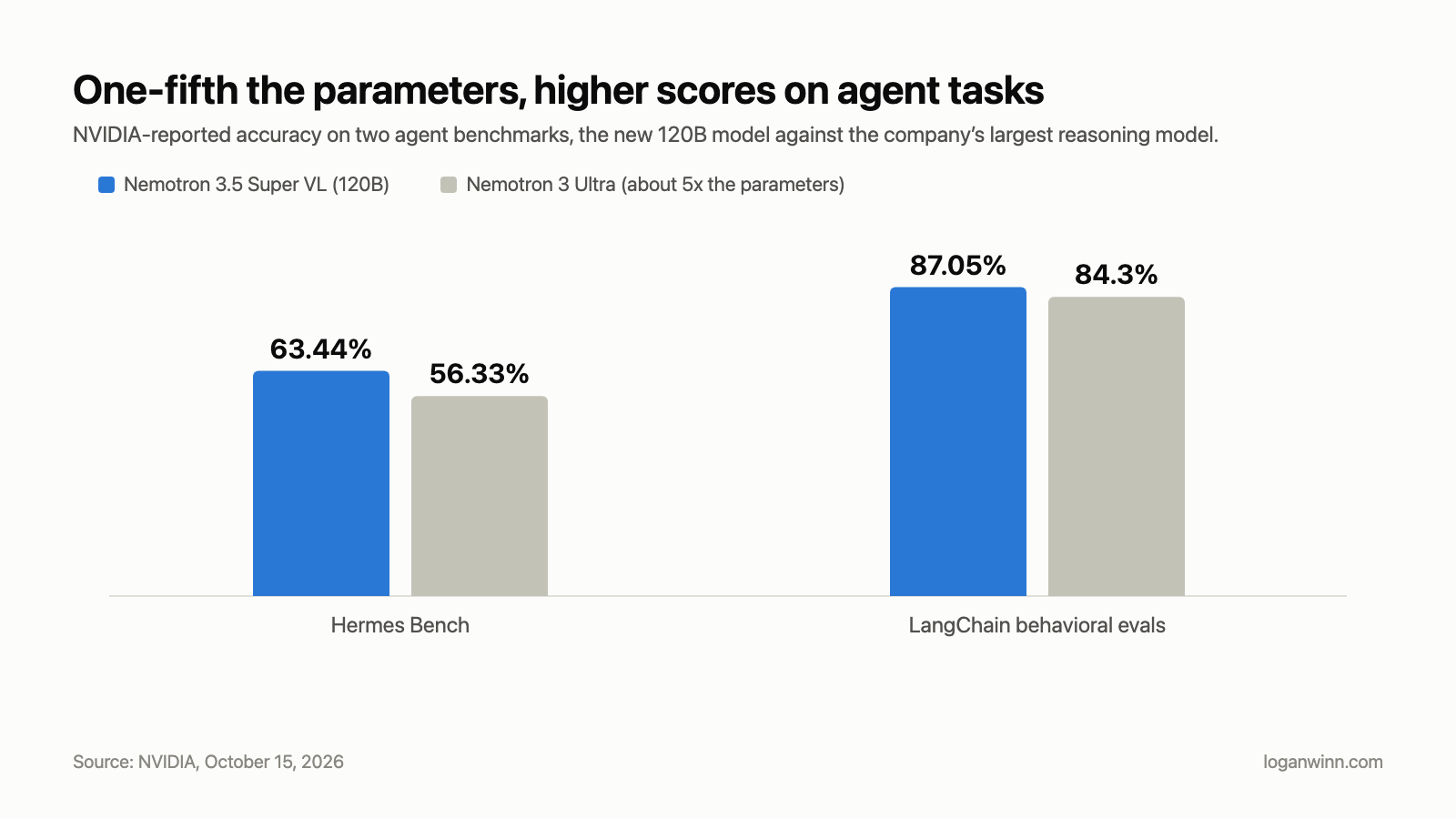
NVIDIA says it matches its own largest reasoning model, Nemotron 3 Ultra, on multimodal agent tasks at roughly one-fifth the parameter count, and that it runs up to 5x faster than other open models in its size class on a single GPU. Those are the company's own numbers, so read them that way. The published scores are still worth a look: 89.5% on GPQA-Diamond, 71.1% on SWE-bench Verified, and 78% on BrowseComp.
Two smaller siblings came with it. Nemotron 3.5 Bolt 74B-A9B uses native 2-bit quantization to fit in 24GB of memory, which means it runs on an RTX laptop or a DGX Spark on your desk. A 4GB version for voice assistants and on-device agents, Bolt E4B, lands October 23.
And it is open in the way that counts. The weights are on Hugging Face under the OpenMDW 1.1 license, which allows commercial use. NVIDIA also published the training datasets, the training recipes, and the reinforcement-learning environments it used in post-training. You can download it today from Hugging Face, OpenRouter, ModelScope, or as an NVIDIA NIM container.
Why the open-model race is the one that matters
The frontier race, the one that gets the headlines, is three or four labs spending tens of billions to push the ceiling. That race matters for the labs and for the handful of customers who need the ceiling.
Most businesses do not need the ceiling. They need a model that reads a 40-page contract without missing the indemnity clause, pulls the line items off a scanned invoice, reads the chart in a board deck, and does it ten thousand times a day at a price that does not show up in the CFO's inbox. That is the open-model race, and this week NVIDIA moved it forward on three fronts.
1. The cost floor dropped again. A 120B model that only runs 12B parameters per token costs about what a 12B model costs to serve, with accuracy that NVIDIA says matches a model five times its size. NVIDIA reports that serving it with its Dynamo software on 16 B200 GPUs supports up to 8x as many users at 85% lower first-token latency. When the weights are open, every cloud competes to host them, and the price per token falls toward the cost of electricity.
2. Specialization got cheap. The most interesting posts under NVIDIA's announcement were not about the model. They were about what partners did to it. Handshake post-trained it on about 2,000 data points from enterprise R&D experts and reported that accuracy on life-sciences artifact interpretation doubled. Mercor post-trained it with Ramp, Harvey, and Cognition on targeted datasets from its APEX benchmarks for finance, legal, and software work. Scale AI customized it for EY's M&A due-diligence agent. Two thousand examples is a week of work for a domain expert. That is the new price of a model that knows your business.
3. It runs where your data already is. Open weights mean you choose the box. On a laptop with Bolt. On a workstation with DGX Spark. On any cloud that rents an NVIDIA GPU, including DigitalOcean, which already publishes a tutorial for running Nemotron 3 on a GPU Droplet. I wrote yesterday about why DigitalOcean's open-model inference business grew 212% in a year. This release is the supply side of that story. The better the open models get, the more of the AI market runs on infrastructure that any company can rent by the hour.
The sales read
I spent years watching enterprise buyers sign for platforms they could not leave. The lock-in was the product. Open weights break that pattern in a way that is easy to underrate: if the model that runs your claims process is a file you downloaded, you can move it between clouds on a Tuesday, fine-tune it without asking permission, and audit exactly what it does. For a buyer, that is bargaining power. For a seller, it means the pitch shifts from "our model is smarter" to "our platform runs your model better," which is a pitch about speed, price, and support. Those are things a customer can measure.
Salesforce, Atlassian, CrowdStrike, Perplexity, and Synopsys are already integrating the new model into their products. They did not wait for a frontier lab's permission. That tells you where enterprise software is heading.
The operator read
Here is how I'd use it, from the seat of someone who runs agents every day. My agents do two kinds of work. The first is judgment: write this outreach, decide if this lead is real, draft this reply in my voice. That still goes to a frontier model. The second is reading: open the PDF, find the number, classify the document, pull the dates out of the contract, tell me what the chart says. That work is 80% of the volume and almost none of the judgment, and it is exactly what Super VL was built for.
Routing the reading work to an open model running on a rented GPU does not make the agents dumber. It makes the bill predictable and keeps the expensive model for the calls that deserve it.
What I'd do this week if I ran a team
1. Pick one document-heavy workflow you already pay a frontier model to handle. Invoices, contracts, support tickets with screenshots. 2. Run a hundred of them through Nemotron 3.5 Super VL on OpenRouter or a rented GPU and compare the output to what you get now. 3. If it holds, collect two thousand examples from the person who does that job best and post-train it. That is the step the partners above took, and it is the step most companies skip.
The frontier labs will keep building for the frontier. NVIDIA just handed everyone else a model that reads, reasons, and fits on a laptop, along with the recipe to make it theirs. The open-model race is the one your business is actually in.
More of my writing, including the DigitalOcean piece this one builds on, lives at loganwinn.com/blog.
Cover photo: Jensen Huang at CES 2025, by Pronoia, CC0, via Wikimedia Commons.