Salesforce and Anthropic just put the CRM inside Claude. Here's what a former Salesforce BDR sees in it.
Originally published on LinkedIn.
From October 2021 to May 2023 I was a business development rep in Salesforce's financial services enterprise group. I partnered with three enterprise AEs. My job, most days, was the prep: pull the account history, read the last six months of activity, figure out who we knew, write the call brief, and then update every record after the call so the next person didn't start from zero.
It was useful work. It was also the work every seller quietly wished someone else would do.
On August 26, Salesforce and Anthropic announced an expanded partnership they're calling Claudeforce. On September 15, the first product from it, Salesforce in Claude, went into open beta. I read both announcements the way I would have read them from my old desk. Here is what actually shipped, and what I think it means.
What shipped on September 15
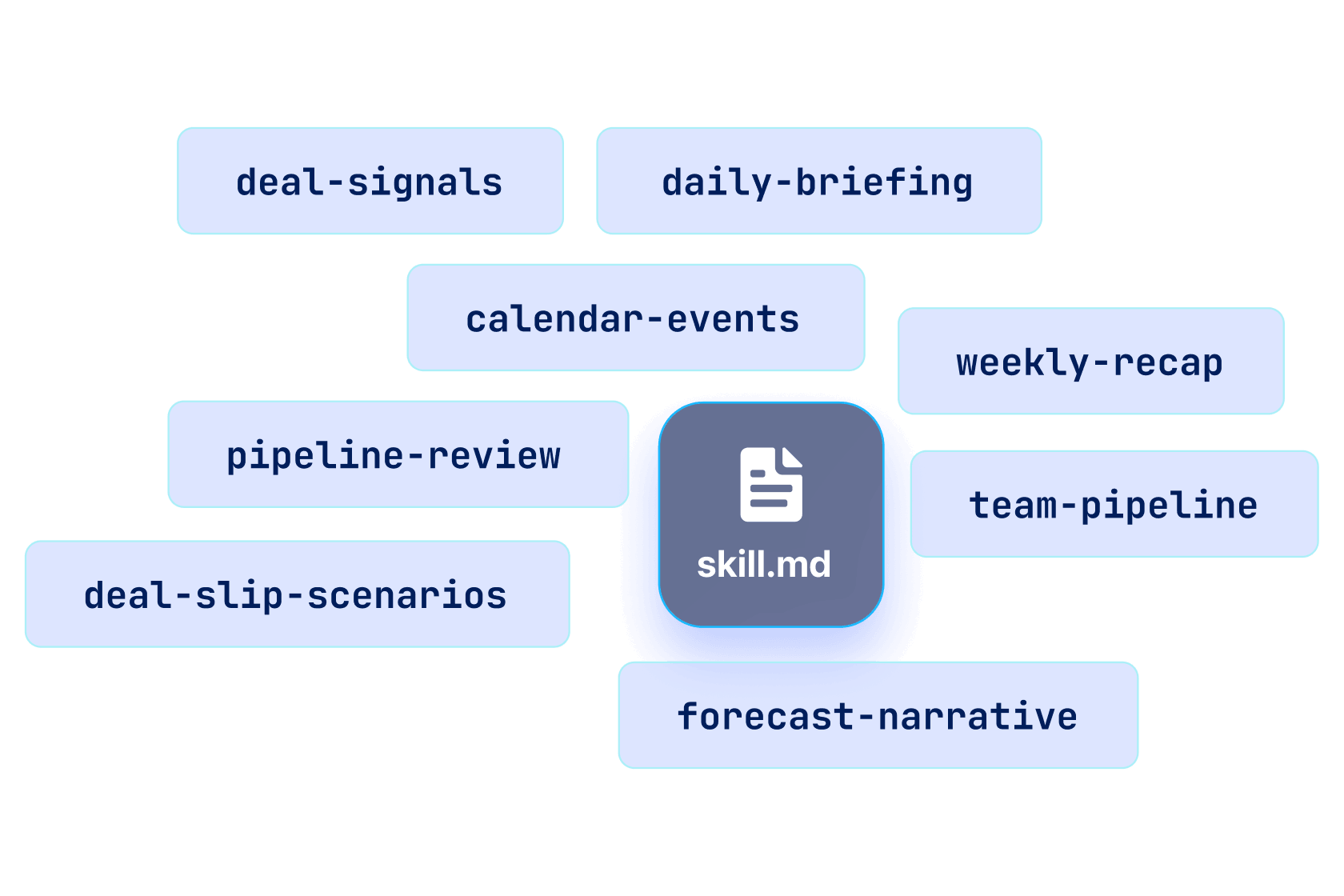
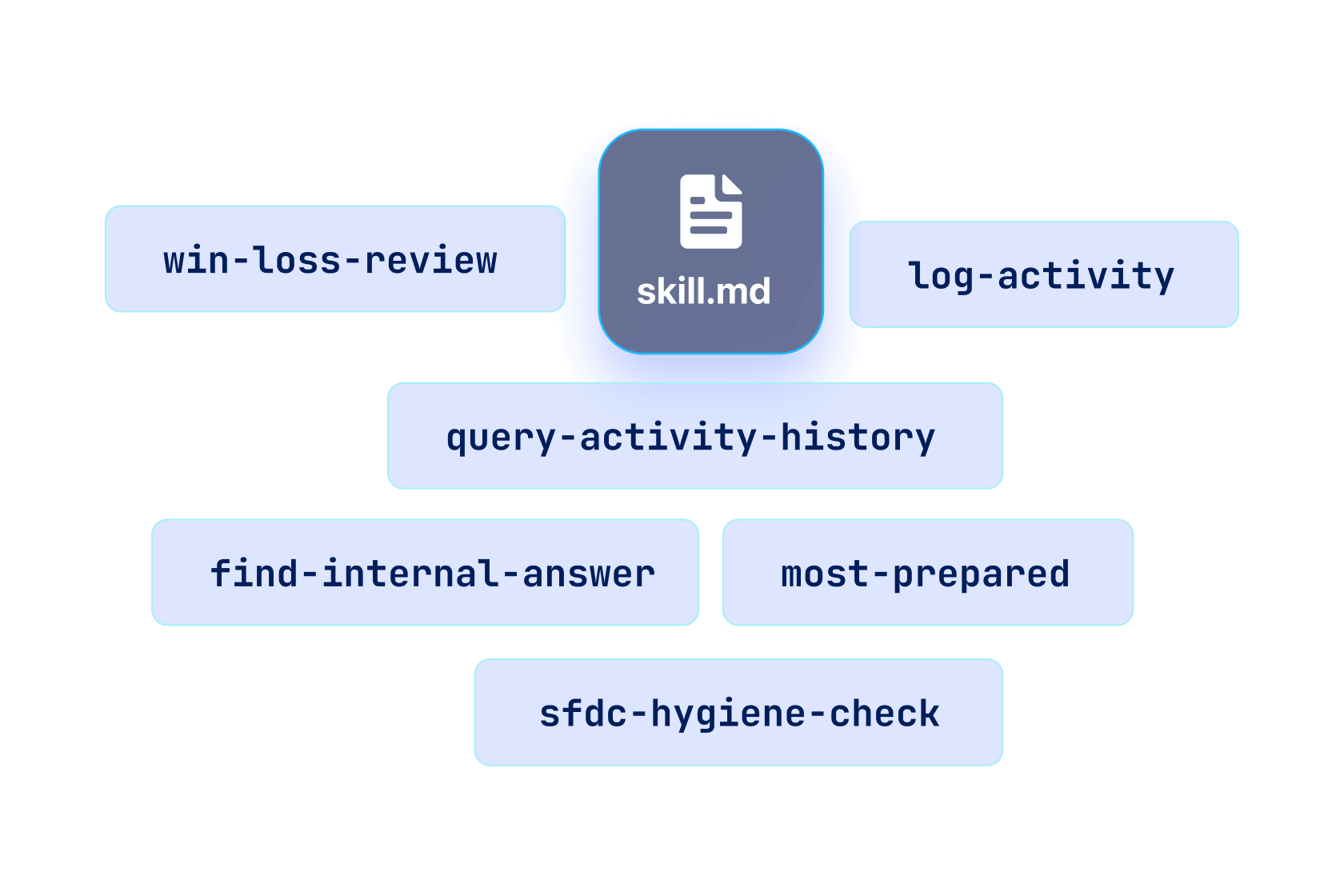
Salesforce in Claude is a plugin. It comes with 37 prebuilt sales skills, and Anthropic says 7,000 Salesforce sellers are already using it internally.
The skills named in the beta post: a personalized daily briefing, account research, call preparation, pipeline review, opportunity scoring, close-plan drafting, turning a meeting transcript into CRM updates, follow-up emails, pipeline dashboards, forecast narratives, adding contacts, and filling qualification fields.
Read that list against my old day. Every item on it was a browser tab.
Two details matter more than the skill count.
First, permissions. Claude reads live Salesforce data using the seller's own Salesforce permissions, not a service account with admin rights. If you couldn't see a record before, Claude can't see it for you now.
Second, approval. By default, Claude drafts the change and the seller approves it before anything writes back to the CRM. Anyone who has watched a bad bulk update wipe out a quarter of pipeline notes will understand why that default is the right one.
Admins connect Salesforce once for the whole organization through AgentExchange, choose which groups get the plugin, and sellers sign in with their own Salesforce credentials. It's available on every paid Claude plan.
It runs in both directions
The plugin is the part sellers will notice. The other half of the announcement is Claude inside Salesforce's own products:
- Claude is a reasoning model for the Atlas Reasoning Engine and the default model for Agentforce Vibes and Agentforce Coworker.
- Claude is the default model across Slack, powering Slackbot and Claude Tag.
- Through Amazon Bedrock, Claude is available inside the Salesforce trust boundary, which is what lets banks, insurers, and health systems use it without their data leaving Salesforce's perimeter.
That last one is the piece I would have cared about most in financial services. Every enterprise deal I touched had a security review that took longer than the sales cycle.
The number I keep coming back to
In the same release, Salesforce said Slackbot drove 8.1 million annualized productivity hours for its own employees, double the prior quarter. Whatever you think of "productivity hours" as a unit, the point stands: they ran this on themselves before they sold it. In my experience the companies that do that are the ones whose demos survive contact with a real customer.
What the customers are saying
David Eckstein, CFO at Legora: "With Salesforce in Claude, our sellers turn live data into meeting briefings in seconds instead of hours."
Alexa Vignone, President and Chief Revenue Officer at Salesforce: sellers "can start the day with pipeline review done and account history ready."
GitLab, Siemens, and Legora are named as early deployments.
The Benioff line
Marc Benioff said on the earnings call, per CNBC: "This nonsense of the SaaSpocalypse, I think it's time for it to stop." Salesforce Ben reported the stock closed up 14% that day.
Dario Amodei's line from the release is the one I'd quote to a customer: companies "can point Claude at customer information and business context they've been building in Salesforce for decades, and use it to actually run and grow their businesses."
My read
I don't think this is the end of the CRM. Twenty-seven years of business logic, permissions, and workflow rules don't disappear because the front end changed. What changed is the screen. For a seller, the screen is now a chat window that already knows the account.
I run my own back office on AI agents today, across the two JG Academy jiu-jitsu gyms I co-own and everything else I do. The lesson has been the same every time: the value isn't in the flashy demo. It's in the prep work nobody wanted to do, done before you sit down.
Thirty-seven of those jobs just got a default owner.
If you sell on Salesforce, what's the first skill you'd hand off? I'd have picked call prep, every time.